



The TLDR;
- Most internal media security conversations focus on the wrong things, like encryption and firewalls, while the real risks live closer to access control and user management
- Security and usability are not opposites. A platform that employees won’t use because it’s friction-heavy isn’t secure, it’s just ignored
- Privacy and access control are directly tied to employee trust, especially when sensitive business communications are involved
- The right questions to ask when evaluating a platform have nothing to do with vendor marketing and everything to do with how content is governed at scale
The Security Conversation That Keeps Getting Sidetracked
Every enterprise buyer eventually asks the question.
“Is your platform secure?”
And almost every vendor says yes. They point to encryption. They mention SOC 2. They reference HTTPS and CDN infrastructure and token-authenticated streams. All of that matters. But none of it answers the question buyers are actually trying to ask.
The real question is: What happens if someone who shouldn’t see this content does? Or: Can I prove to my CISO that internal media is distributed, governed, and audited the right way?
Those are different questions. And most security conversations for internal media platforms never get there.
For teams responsible for internal communications, training, and sales enablement, understanding what secure streaming actually requires in practice is the difference between deploying something that works and deploying something that creates risk without realizing it.
What Encryption Doesn’t Solve
Encryption in transit is table stakes. If a platform doesn’t have it, stop the conversation. But having it doesn’t make your media program secure.
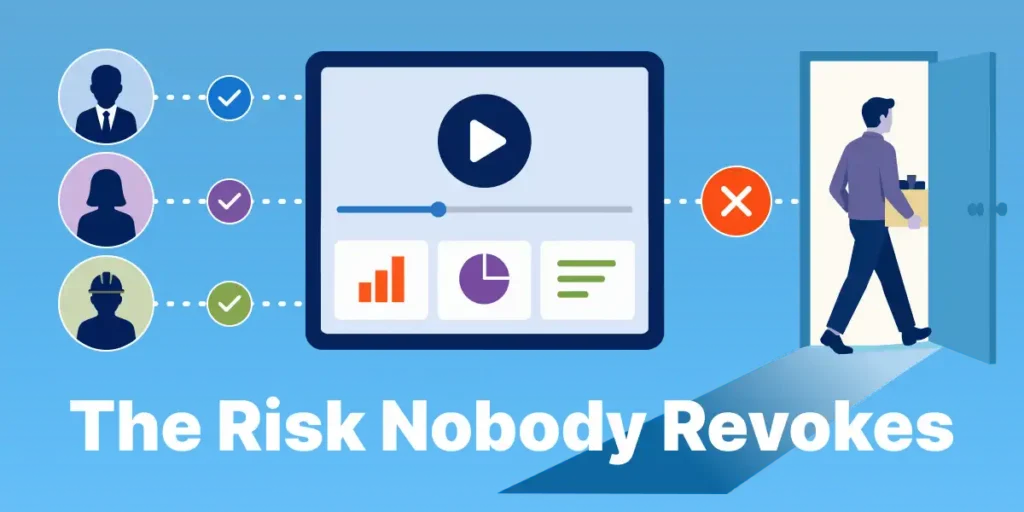
Here’s the scenario that keeps compliance teams up at night: a former employee still has access to an internal podcast feed because nobody removed them from the system when they left. Or a regional sales training series is accessible to employees in a geography where the content isn’t approved for distribution. Or a confidential executive briefing is embedded in an intranet page with no authentication gate, meaning anyone with the URL can access it.
None of these problems are encryption problems. They’re access control problems. They’re user management problems. They’re governance problems.
The best way to think about it: encryption is the lock on the door, but secure user management determines who has keys.
Enterprises that treat security as a technical infrastructure question often miss the operational layer entirely. That’s where the real exposure lives.
The Access Control Layer: Where Security Becomes Real
Practically speaking, enterprise-grade security for internal media means being able to answer a short set of questions at any time:
Who can see this content? This sounds obvious, but it gets complicated fast at scale. Role-based access controls should determine what shows, series, or channels each employee can access based on their role, team, geography, or employment status. Not a blanket “all employees” permission that’s easier to configure but nearly impossible to audit.
How is identity verified? SSO (single sign-on) integration isn’t a nice-to-have for enterprise media. It’s required. It ties media access directly to your existing identity management system, which means when someone is offboarded, their access disappears automatically. No orphaned credentials. No manual cleanup.
Where can content be accessed from? IP restriction and domain allowlisting let organizations control not just who accesses content, but from where. This is particularly important for organizations with contractor populations, BYOD policies, or content that carries regulatory sensitivity. Geo-restrictions add another layer for companies operating across multiple regions with different compliance requirements.
Can content be embedded without compromising access control? This is a question more teams should be asking. Embedding media content into SharePoint, an intranet, or an LMS is a common and smart distribution strategy. But if the embedded player doesn’t authenticate the viewer, the access control layer disappears the moment the content leaves the native platform.
A secure embed isn’t just a video or audio player dropped into a page. It’s one that authenticates the user, respects their permissions, and tracks their engagement in the same way the native platform does.
Why Friction Isn’t the Same as Security
A platform that’s painful to use doesn’t protect your content. It just trains employees to work around it.
This is one of the most common misconceptions in enterprise media procurement: that tighter restrictions automatically mean better security. In practice, overly complex login flows, lack of mobile support, and poor user experience lead to shadow IT. Employees find unofficial channels to share content because the official one is too cumbersome.
Real security includes usability by design. Employees should be able to access internal media through SSO, without separate credentials, with a consumer-grade experience that works on their phone during a commute or in a plant environment without a corporate laptop. The experience should feel like Spotify, not like logging into a legacy compliance portal.
This matters because a frictionless experience is how you get adoption. And adoption is what makes a deskless or distributed workforce actually reachable through internal media.
If employees don’t show up to the channel, no amount of backend infrastructure security matters.
Privacy, Trust, and What Employees Are Really Paying Attention To
There’s a dimension of internal media security that rarely comes up in vendor conversations but sits at the front of every employee’s mind: is this thing tracking me?
Named-user analytics, which is exactly what enterprise media platforms use to deliver the engagement data organizations need, also means employees know they’re being watched. A listening history. A completion percentage. A timestamp showing when they played and stopped.
That data is valuable for program managers. It’s also potentially sensitive for employees, particularly in organizations where completion rates are tied to compliance requirements or performance review frameworks.
The platforms that handle this well are transparent about it. They’re clear in the app about what’s tracked, how it’s used, and who can see it. That transparency isn’t just an ethical consideration. It directly affects whether employees engage with the platform honestly or find ways to game completion metrics.
Employee trust and platform security aren’t separate conversations. They’re the same conversation. If people don’t trust the platform, they won’t use it the way it’s intended. And a platform that isn’t used isn’t delivering value or protecting information.
What Secure Delivery Actually Looks Like at Scale
For organizations with 1,000 or more employees, the security question quickly becomes a governance question. It’s no longer just about whether the technology is secure. It’s about whether you can administer, audit, and scale that security without creating a full-time job for your IT team.
That means looking for platforms with:
Admin consoles that actually work. The ability to manage user access, organize content by team or department, and configure distribution rules without submitting an IT ticket for every change. Program administrators need controls they can operate themselves.
Automated user provisioning. SCIM (System for Cross-domain Identity Management) support allows enterprise directories like Okta, Azure AD, or Workday to automatically provision and deprovision users in the media platform. When someone joins, they get access. When they leave, it’s gone. Without manual intervention.
Audit trails. The ability to see who accessed what content, when, and from where. This isn’t just a compliance feature. It’s how you prove to legal, compliance, or HR that your content governance policies were followed.
Multi-team content segmentation. Large organizations often need to manage media programs across multiple departments or business units. Content segmentation without duplication means sales can have a private channel that HR can’t see, and vice versa, without spinning up separate platform instances or creating administrative chaos.
These aren’t advanced features. They’re baseline requirements for enterprise deployment. The gap is that many platforms market themselves as enterprise-ready without actually being architected to support this level of governance from the ground up.
How to Evaluate Platforms Without Getting Spun
When a vendor says their platform is secure, here are the questions that actually matter:
Does SSO work bidirectionally? Not just for login, but for user deprovisioning. If the answer is “we support SSO,” ask whether that integration automatically removes access when a user is offboarded in the parent directory.
How does content access work in an embed? If a piece of media is embedded in a SharePoint page or an LMS, does the embed inherit the viewer’s authentication? Or does anyone with the URL get access?
What happens to content access when someone changes roles? If an employee moves from one business unit to another, how is access updated? Is it automatic or manual?
Can you segment content between teams without creating separate platform instances? Multi-team administration is a real architectural feature, not something that can be bolted on.
What data does the platform collect about individual users, and how is it surfaced? Understand both what program managers can see and what employees are informed about. The answer to both matters.
These questions won’t always get clean answers. But they’ll tell you quickly whether a vendor has genuinely built for enterprise security requirements or whether they’ve checked the marketing boxes without going deeper.
The Bottom Line
Secure streaming for internal communications isn’t a single feature. It’s a set of operational capabilities that have to work together: identity management, access controls, embed authentication, admin governance, and user privacy transparency.
Organizations that evaluate platforms on surface-level security claims often make a purchase they have to walk back. The ones that ask deeper operational questions end up with a platform they can actually govern, audit, and scale.
If your internal media program is growing, or if you’re evaluating platforms for the first time, the security conversation should start with access control and governance, not encryption specs. That’s where real protection lives.
FAQs
What is the difference between secure streaming and private podcasting? Private podcasting refers specifically to audio content delivered through a secure, authenticated feed. Secure streaming is a broader term that applies to any media content, audio or video, delivered through access-controlled, authenticated infrastructure. The two overlap significantly in enterprise contexts.
Does SSO guarantee that my internal media content is secure? SSO is a critical component but not the whole picture. It handles authentication and automates access management when integrated with your identity directory. But you still need role-based access controls, embed authentication, and audit capabilities to have a complete security posture.
How do I know if a platform’s access controls will work with my enterprise directory? Ask specifically about SCIM support and bidirectional sync with your directory provider (Okta, Azure AD, Workday, etc.). The test isn’t just whether SSO login works. It’s whether the integration handles automatic provisioning and deprovisioning as employees join, move roles, or leave the organization.
Can employees be identified by their listening data? On most enterprise platforms, yes. Named-user analytics means individual engagement data is visible to program administrators. Employees should be informed of what data is tracked and how it’s used, particularly if completion data is tied to compliance requirements.