



The TLDR;
- Most training dashboards track activity, not absorption. Opens, completions, and downloads prove participation, not understanding.
- Behavioral engagement data (drop-off points, replays, skip patterns, listen-through rates) reveals whether content is actually landing or getting tuned out.
- The gap between what teams measure and what actually drives field performance is where most training budgets quietly lose value.
- Leaders who see this clearly stop optimizing for completion rates and start optimizing for the moments that change behavior.
Your Dashboard Is Telling You a Story That Isn’t True
Training dashboards tend to look great.
Completion rates in the 90s. Course opens climbing quarter over quarter. Downloads trending up. Certification numbers on track.
Then leadership asks why field performance is flat. Why reps are still fumbling the same objection. Why the new product messaging isn’t showing up in customer conversations. Why last quarter’s compliance training didn’t prevent this quarter’s compliance issue.
The dashboard looked like proof. It wasn’t.
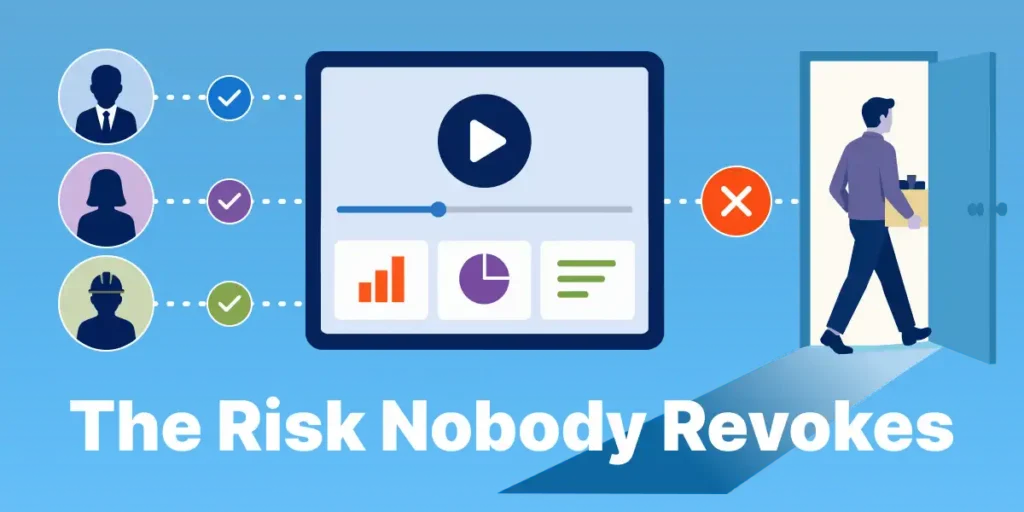
Most training measurement was built to answer one question: did the employee participate? That question made sense when training meant scheduled classroom sessions and the only available data point was attendance. But when participation becomes a checkbox (click play, hit complete, move on) the data you get back stops meaning what you think it means.
You’re measuring motion, not absorption. And the two are not the same thing.
The Vanity Metrics That Feel Like Proof
Here’s the uncomfortable part. The metrics most training teams rely on are structurally incapable of telling you whether your content worked.
Opens and views. Someone clicked. That’s it. You don’t know if they watched, listened, or walked away from the screen. In a world of autoplay and background tabs, an “open” often means nothing at all.
Completions. The employee reached the end marker. They may have skipped the middle, played at 2x speed with the audio muted, or left the module running during lunch. Completion is a participation signal. It is not a comprehension signal.
Downloads. The file moved to a device. Whether it was ever opened, read, or used is a separate question your dashboard cannot answer.
Time spent. Elapsed minutes in a module tell you the tab was open, not that anyone was paying attention.
None of these are bad metrics in isolation. They become dangerous when they’re the only metrics. They give training teams and their executive sponsors a false sense that content is working because the numbers are green. Meanwhile, the actual signal (whether employees are absorbing, retaining, and applying what they heard) is nowhere on the dashboard.
This is the same gap that makes most LMS platforms look productive while engagement quietly suffers. The tools weren’t built to measure absorption. They were built to measure compliance. And when the measurement is built for compliance, the insights are too.
What Behavioral Engagement Data Actually Shows
The alternative isn’t to throw out completion rates. It’s to add a layer underneath them that tells you what actually happened during the content, not just whether someone got to the end.
Behavioral engagement data tracks how people interact with content moment by moment. It answers questions activity metrics can’t:
- Where do employees drop off? A steep decline three minutes into a fifteen-minute module means something is broken in the first three minutes, not that the topic is uninteresting.
- What gets replayed? Sections employees rewind are either especially valuable or especially confusing. Both are worth knowing.
- What gets skipped? Skip patterns reveal content that feels irrelevant, redundant, or too long for the value delivered.
- Where does listen-through collapse? If most of your audience bails at the 60% mark across multiple episodes, you have a structural problem, not a content problem.
This is the difference between knowing someone attended the meeting and knowing when they checked out. One is a data point. The other is a diagnostic.
For a closer look at how this plays out in practice, the team at uStudio has documented how to read engagement graphs and use the patterns to refine content. The mechanics matter, but the bigger shift is conceptual. You stop grading content on whether it got consumed and start grading it on whether it got absorbed.
Real World Example: What Astellas Figured Out
Astellas, the global pharmaceutical company, is a useful illustration. Their learning and development team was producing internal audio content for training, enablement, and leadership communication across a distributed workforce. Activity metrics told part of the story. What shaped their program over time was behavioral data. They used engagement insights to understand which episodes held attention, which lost audiences, and where content investments were paying off.
The lesson wasn’t that their content was bad. It was that production instincts and completion rates were insufficient on their own. Once the team could see how employees actually experienced the content, they made sharper decisions about format, length, and structure. That’s what closes the gap between a training asset that got delivered and a training asset that got internalized.
Most teams don’t need more training content. They need more clarity on what the training they already have is actually doing.
Why This Gap Matters for Field Performance
There’s a reason this measurement problem compounds in sales enablement and field training.
Field performance is the ultimate lagging indicator. When a rep struggles with a new product pitch or a changed compliance protocol, the root cause sits weeks or months upstream in a training module no one flagged as a problem. The completion rate was fine. The assessment scores were fine. The post-training survey was fine. And yet the behavior didn’t change.
This is what happens when enablement tools are built for a decade where training meant classrooms and 90-minute webinars. The measurement model assumes information delivered equals information absorbed. In modern workflows (mobile, distributed, attention-fragmented) that assumption quietly breaks.
Behavioral engagement data doesn’t solve field performance on its own. But it’s the earliest signal you can get that a training asset isn’t doing what you need it to do. Without it, you’re flying blind until the quarterly numbers come in.
How to Build a Case for Deeper Analytics
If you’re a training or enablement leader who sees this gap clearly, the next step is usually an internal conversation about getting better measurement in place. A few things tend to help that conversation go well.
Anchor the ask in outcomes, not features. No executive approves “better analytics” as a line item. They approve measurable improvements in the things analytics make possible (faster ramp, higher retention, fewer repeat compliance incidents). Lead with the outcome.
Show the cost of the current blind spot. If you can point to a recent initiative that looked successful on the dashboard but underperformed in the field, you have your business case. The gap between perceived success and actual impact is the most expensive thing in most training budgets.
Frame behavioral data as a feedback loop, not a surveillance tool. The value of drop-off and replay data is that it helps content teams improve. Framing it as employee monitoring will sink the conversation fast. Framing it as content diagnostics keeps it on track.
Start with one high-stakes content set. You don’t need to re-measure everything at once. Pick the training that matters most (new product launches, onboarding, compliance) and instrument that. Patterns surface quickly when the content is high-volume and high-visibility.
Final Word
Most training teams aren’t measuring badly. They’re measuring what the old tools were built to measure. The result is a generation of dashboards that look healthy while the work they’re supposed to reflect quietly underperforms.
Better measurement isn’t about collecting more data. It’s about collecting the right data. Behavioral engagement gives training leaders something activity metrics never could: a picture of what actually happened inside the content, not just around it.
Once you see the blind spot, you can’t unsee it. And the teams that address it first tend to be the ones whose training investment starts showing up where it was always supposed to, in field performance, in retention, in the measurable outcomes executives actually fund.
FAQs
What’s wrong with using completion rates to measure training success? Completion rates measure participation, not comprehension. An employee can complete a module without absorbing it, especially in self-paced digital formats. Completion is a useful baseline metric but it shouldn’t be the primary signal that training worked.
What is behavioral engagement data in training? Behavioral engagement data tracks how employees interact with training content moment by moment. It includes drop-off points, replays, skip patterns, and listen-through rates. Together, these signals show where content holds attention, where it loses people, and which sections resonate most.
Isn’t tracking employee behavior invasive? Behavioral engagement data measures how content is consumed, not individual employee productivity. Done well, it’s a content diagnostic tool, not a surveillance tool. The goal is improving training assets, not monitoring employees.
How is this different from survey-based training feedback? Surveys capture what employees remember and are willing to report after the fact. Behavioral data captures what actually happened in real time. Both have value, but behavioral data is harder to misremember or sugarcoat.